

When somebody clicks through to your website, they are usually trying to answer a few important questions:
- Can this business help me?
- Do they understand what I need?
- Can I trust them?
- What will the experience be like?
- How much might it cost?
- What should I do next?
If those answers are difficult to find, people rarely spend time searching for them.
They leave.
This does not necessarily mean they disliked your business. They may simply have felt uncertain, distracted or unsure about what to do next.
A successful customer journey removes that uncertainty.
What happens after someone finds you?
Many businesses concentrate heavily on visibility.
They work hard to appear on Google, publish social media content, improve their reviews and attract visitors to their website.
But visibility without a clear journey can create attention without action.
The customer arrives—and then reaches a dead end.
Common obstacles include:
- A website that looks attractive but has no clear next step
- Too many competing buttons and choices
- Contact information that is difficult to find
- No straightforward way to book
- Forms that request too much information
- Little visible customer proof
- No explanation of what happens after an enquiry
- No follow-up when someone is interested but not ready
The problem is not always that the business needs more visitors.
Sometimes it needs to make better use of the attention it already receives.
Trust bridges the gap
Before someone books, they usually need to feel safe choosing you.
That is where customer reviews become especially powerful.
Your website can explain what you offer, but reviews provide evidence of what the experience is actually like.
They can reassure potential customers about:
- The quality of your service
- Your reliability and communication
- The way you treat people
- The results customers have received
- How you respond when something needs attention
Your website should guide—not overwhelm
A converting website does not need to be complicated.
Its purpose is to help the right person understand what you offer and move confidently towards the next step.
A strong page generally needs:
A clear promise
Tell visitors who you help and what meaningful result you provide.
Avoid beginning with a long history of the business. Start with the customer and the problem they want solved.
Relevant services
Explain the available options in language your customers understand.
Focus on the outcome rather than overwhelming them with internal terminology or an exhaustive feature list.
Visible trust
Include genuine reviews, customer stories, qualifications, photographs and examples of your work.
Let people see the real business behind the screen.
One primary action
Decide what you most want visitors to do.
That might be:
- Book a call
- Request a quote
- Schedule an appointment
- Download a guide
- Send an enquiry
- Start a free trial
Other links can still exist, but the principal next step should be unmistakable.
Not everyone is ready to book immediately
Some visitors will be ready to act during their first visit.
Others will be interested but need more time.
They may want to compare options, speak to someone else, wait until payday or simply return when life feels less busy.
If the only available choices are book now or leave, many interested visitors will disappear.
A useful lead magnet provides a gentler next step.
This might be:
- A practical guide
- A checklist
- A free sample
- A useful template
- A short email course
- A business assessment
- An introductory video
The visitor receives something genuinely helpful, and the business gains permission to continue the conversation through email.
The aim is not to pressure people.
It is to remain useful and visible until they are ready.
Make booking feel easy
Once somebody decides to speak with you, booking should require as little effort as possible.
A connected booking funnel allows them to:
- Understand what the appointment is for
- See available dates and times
- Choose a suitable appointment
- Provide the essential information
- Receive immediate confirmation
- Add the appointment to their calendar
- Know exactly what will happen next
Every unnecessary step introduces another opportunity for distraction or doubt.
Your booking page should clearly explain:
- What the call or appointment includes
- How long it will last
- Whether it is online or in person
- Whether there is a charge
- What the customer should prepare
- What happens after booking
Clarity reduces uncertainty and helps the customer arrive feeling comfortable and prepared.
The confirmation is part of the experience
The customer journey does not stop when someone presses the booking button.
The confirmation email is often the first direct communication they receive from you. It should feel warm, professional and reassuring.
A good confirmation should include:
- The date and time
- The meeting location or joining link
- A calendar invitation
- What will be discussed
- Anything they need to prepare
- Contact details in case something changes
A reminder closer to the appointment can reduce missed calls and help the customer feel looked after.
After the appointment, thoughtful follow-up keeps the momentum moving. This might include a summary, recommended next steps, useful links or a proposal.
Automation can deliver these communications consistently while still sounding human and personal.
Connect each part of the journey
The strongest customer journeys do not treat marketing activities as separate pieces.
Everything supports the next step:
Google and social media create discovery.
Reviews create trust.
Your website creates understanding.
A lead magnet keeps the relationship open.
Email follow-up builds confidence.
The booking funnel creates action.
Confirmation and reminders improve the experience.
When these pieces are disconnected, customers can fall through the gaps.
When they work together, the journey feels natural.
What if you’ve already got a website?
You may not need a completely new website.
A business can have an established, attractive site and still be missing the conversion journey around it.
You might only need to add or improve:
- A focused landing page
- A clearer call to action
- Customer reviews in the right places
- A lead magnet and email sequence
- A booking funnel
- A link-in-bio page
- Automated confirmation and reminders
- An upsell or follow-up offer
The goal is not to replace something that already works.
It is to connect the missing steps so that more visitors can become customers.
Measure the journey—not simply the traffic
Website traffic can be encouraging, but the number of visitors alone does not tell the complete story.
Consider:
- How many visitors take the next step?
- Which pages create enquiries?
- Where do people leave?
- How many bookings are completed?
- Which reviews or testimonials receive attention?
- Are people opening and clicking follow-up emails?
- Which source produces the most suitable customers?
A smaller number of well-matched visitors moving through a clear journey can be far more valuable than a large amount of unfocused traffic.
From customer to advocate
The flow continues after the service has been delivered.
A happy customer can be invited to share honest feedback. That review then reassures the next potential customer, who follows the same journey and may eventually become another advocate.
The complete cycle becomes:
Found → Trusted → Booked → Served → Reviewed → Recommended
This is where customer journeys and word-of-mouth marketing meet.
One positive experience helps create the next.
Create a customer journey that flows
Raving Reviews helps you build the trust that encourages customers to choose your business.
Friendly Funnels helps connect that trust to clear landing pages, lead magnets, booking journeys, email follow-up and automated communication.
Together, they create a smoother path from initial discovery to confirmed appointment—without expecting you to chase every enquiry manually.
Because getting more traffic is not always the answer.
Sometimes the greatest opportunity is helping the people who already find you take the next step.
Would you like to see where customers may be dropping out of your current journey?
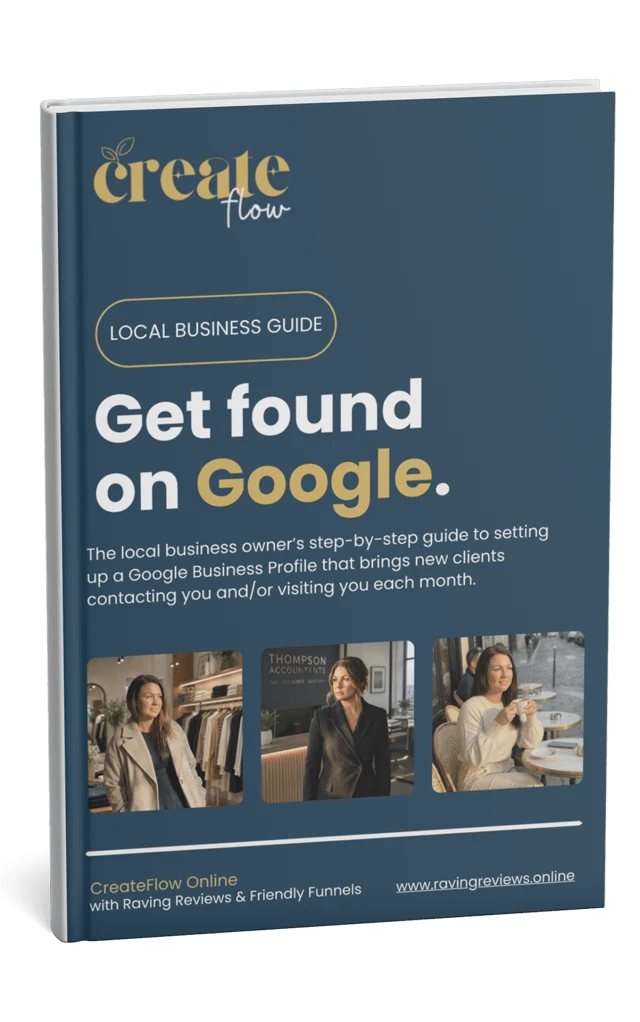
Free guide
Get found on Google.
The step-by-step guide to setting up a Google Business Profile that brings new clients contacting and visiting you each month.
Check your inbox.
Your guide is on its way. If it isn’t there in a few minutes, have a look in your spam or promotions folder.
Preview only: on the live site this sends the guide from Systeme.